
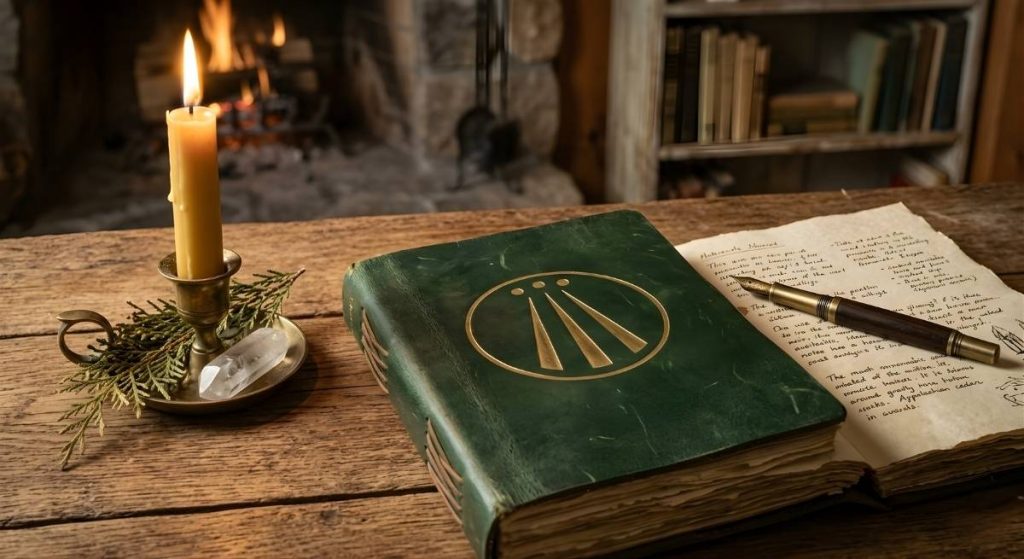
How I Became an analytical mystic
There’s a certain kind of loneliness that comes from living between two worlds. On the mystical side, there’s a pull toward something larger, a sense that the world is alive and speaking. Meaning is found in ordinary things if you know where to look. On the analytical side, the mind never quite switches off. That inner voice asks, “How do you know? Can you prove it? What if you’re just making it up?”
I thought I had to choose, but I discovered a third option.
A Child Who Already Knew
Looking back, I think I was always this way. I grew up bringing rocks and stones that caught my eye home with me. I wasn’t just collecting them but naming them and keeping them as companions. To some, this may sound like a quirky childhood habit (or maybe you did this, too). Now, it makes perfect sense to me.
I was an animist before I had a word for it. I instinctively knew that the world wasn’t only made of matter, it was made of presence. Rocks, trees, animals, the mountains behind the house, everything had a kind of aliveness that felt undeniable.
My connection with animals ran just as deep. I never questioned whether they had inner lives, feelings, or wisdom to offer. Of course they did! The natural world wasn’t simply a backdrop to human life, it was the whole thing. We were just one thread in it.
I was equally curious about plants. Why were certain roots or leaves used for centuries? How did our ancestors know which herbs helped which ailments? It seemed modern medicine was only beginning to catch up to what the old people knew. My curiosity was both practical and magical.
The Roots Underneath the Roots
I’m from the mountains of Appalachia, and that is very important to my story.
The hills and hollows of this area hold ancestral wisdom. A significant amount of Appalachian folk culture stems from Scots-Irish settlers who brought a worldview already shaped by a Celtic way of seeing.
The Celts practiced a deep relationship with the land and plant knowledge was passed through families. Storytelling was a way of preserving truth. They believed that the veil between the seen and unseen worlds is thin in certain places, and at certain times.
Finding the Path Through the Trees
When I discovered OBOD, the Order of Bards, Ovates and Druids, it felt like something I was recognizing. Here was a tradition that honored the questions as much as the answers. Nature was seen as spiritual truth itself. Story, symbol, and myth were not primitive attempts at science but sophisticated technologies for understanding the human soul.
And there was the concept of Awen, the flowing spirit, the divine inspiration that moves through all things. It wasn’t a dogma to be believed but a current to be felt. Awen could be experienced directly, in the rustling of leaves, in the moment a piece of writing comes alive, through a song on the radio, or in the way light hits the mountain on an autumn morning.
For someone with my Scots-Irish, Appalachian roots, it felt ancestral. Like coming home through a door I hadn’t known was there.
What the Analytical Mystic Actually Believes
After years of seeking here is what I have come to understand.
The mystical and the analytical are not opposites. They are two ways of perceiving the same reality.
When I work with herbs, I want to know both the folk tradition lore and the logic. When I work with tarot, I understand the cards as a system of archetypes and psychological mirrors. It is a structured way of asking better questions of yourself, not a hotline to fate. When I explore energy healing modalities, I’m curious about the biofield, the physics of sound and vibration, and what is actually happening in the brain during these practices.
I don’t think science debunks the mystical. I think science is one of the languages the mystical speaks in, and we’re still learning to translate.
Some things that seem like magic are simply science that we don’t fully understand yet. As humans, we have many real and meaningful experiences that may never be explained in a scientific paper, and that’s alright. Wonder doesn’t require logic.
I am an eternal seeker. I need to understand the why behind things, but I’ve also learned that the why doesn’t have to kill the wonder. In fact, the deeper I look, the more wondrous it gets.
Welcome to Hearth and Hollow
This blog is built around three spaces, the way a druidic triad is built, with three ideas grouped together to form a whole main message.
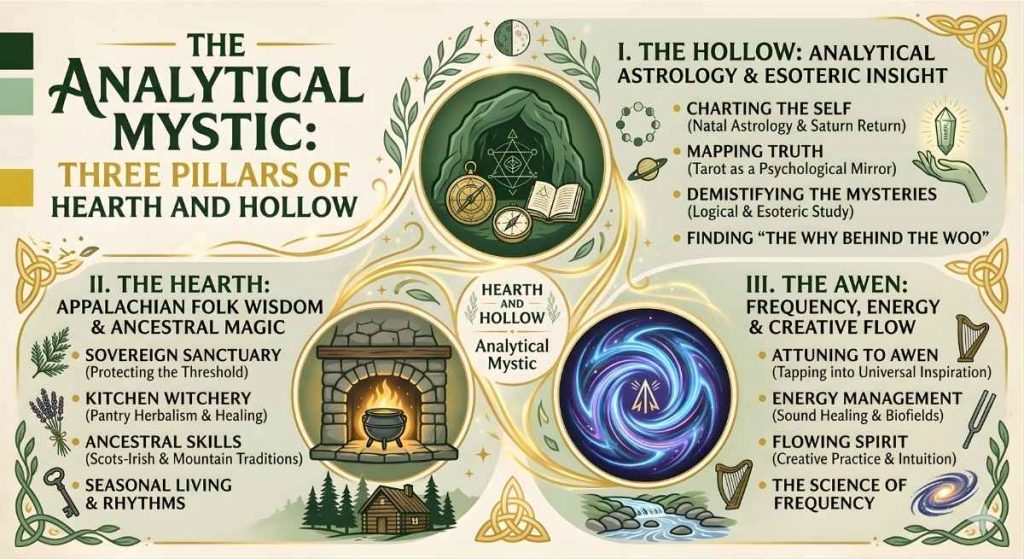
All three are held together by the question, “what is real, and how do we know?”
If you’ve ever felt caught between the mystical and the rational, or if you’ve ever wanted to believe but needed it to make sense, then you’re in the right place.